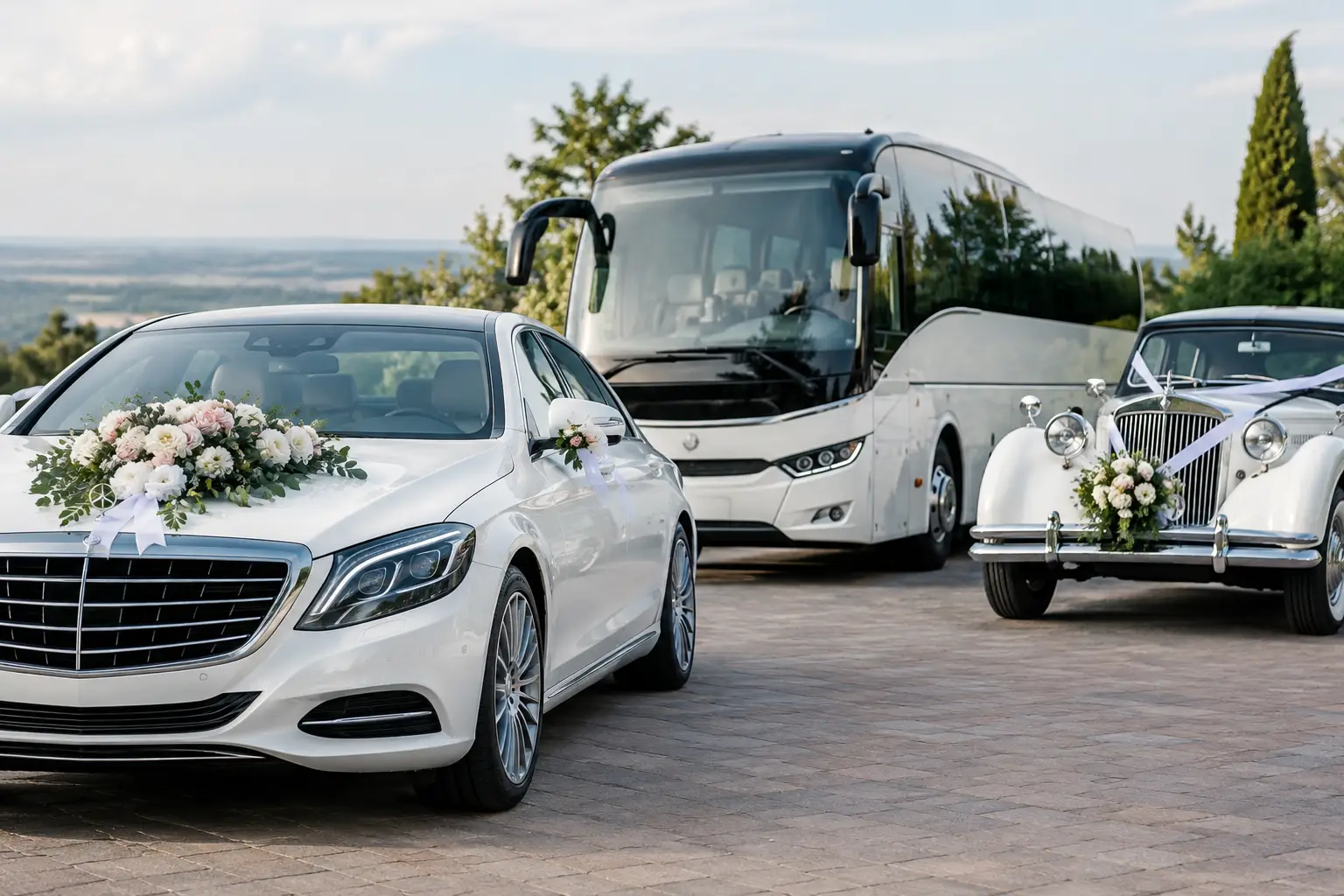
A late bridal arrival can change the feel of an entire ceremony. So can guests circling an unfamiliar venue for parking, or a wedding party split between cars with no clear plan for getting home. The best wedding transport options do more than look good in photographs. They protect the timings, keep key people together and let everyone enjoy the occasion without worrying about directions, traffic or designated drivers.
For weddings across the Midlands and beyond, the right choice depends on your guest numbers, venue access, timetable and the experience you want to create. A considered transport plan need not be extravagant, but it should be booked early and built around the moments where punctuality matters most.
Start with the journeys that matter most
Not every guest needs a chauffeured vehicle. Begin by identifying the journeys that would cause the greatest disruption if they went wrong. Usually, that means transport for the couple, the wedding party, close family members and guests staying at a hotel away from the venue.
Think through the day in order: collection from home or the hotel, travel to the ceremony, onward travel to the reception if it is at a different location, and late-night return journeys. If photographs are taking place between venues, allow for loading and unloading dresses, flowers and personal belongings. A vehicle may only travel a short distance, but the schedule around it can be tight.
It is also worth agreeing one person who can make decisions on the day. This might be a wedding coordinator, best man or family member. They should have the driver’s details, a final running order and authority to adjust collection times if the ceremony overruns.
Best wedding transport options to consider
Executive chauffeur cars
An executive saloon or luxury people carrier is a strong choice for the couple, parents or VIP guests. It offers a calm, private space before the ceremony and an elegant arrival without relying on a novelty vehicle. It is particularly practical for city-centre venues, hotels and country houses where access roads or turning areas may not suit larger vehicles.
For the newly married couple, an executive vehicle also works well for the trip from ceremony to reception and the journey home at the end of the evening. Ask about sufficient luggage space if overnight bags, gifts or change-of-clothes will be travelling too. The most suitable vehicle is not always the smallest or most dramatic one – comfort, easy access and room for wedding attire are often more valuable.
Luxury people carriers for small groups
When close family or the wedding party need to travel together, a premium people carrier makes the logistics simpler. It keeps everyone on the same timetable, reduces the number of arrival points to manage and gives guests space to relax en route.
This is often the sensible option for a bridal party travelling from one hotel, particularly where hair and make-up appointments have made the morning schedule more complicated. For groomsmen, it means no one is delayed by parking, fuel stops or an unexpected diversion. Choose a vehicle with suitable seating capacity rather than assuming luggage room will be available once every seat is occupied.
Minibuses and coaches for guest transfers
A minibus or coach is ideal where a substantial number of guests are staying at the same hotel or where parking at the venue is limited. It is especially helpful for rural settings, large country estates and venues with narrow approach roads, where a stream of individual cars can create congestion.
Guest transport is often best run as a shuttle service. One outward journey can be scheduled to arrive 30 to 45 minutes before the ceremony, followed by a clearly advertised return trip after the reception. For an evening celebration, consider two return departure times. An earlier service suits older relatives and families, while a later one lets other guests stay for the dancing.
Give guests the pick-up point, departure time and return arrangements well before the day. A short note with the invitation, wedding website or accommodation information is more effective than relying on word of mouth. Make it clear that the vehicle will leave at the stated time, particularly for the outward trip.
Classic, vintage or statement vehicles
A classic car, vintage bus or other statement vehicle can become part of the visual character of a wedding. These options can be memorable, but they require more careful planning than an executive chauffeur vehicle. Older vehicles may have limited climate control, restricted luggage space and different reliability considerations. They can also be less practical for long distances or poor weather.
If a statement vehicle is important to you, use it for the high-impact journey, such as the arrival at the ceremony or the couple’s departure, rather than depending on it for every movement of the day. Confirm wet-weather arrangements, accessibility, passenger capacity and what happens if access to the venue changes at short notice.
Self-drive and guest cars
For some weddings, especially those with a single venue and generous parking, individual guest travel is entirely appropriate. It gives people flexibility and avoids the cost of a group transfer. The trade-off is that late arrivals, parking queues and end-of-night driving become harder to control.
If guests are driving, provide a full postcode, the correct entrance, parking instructions and a contact number for the venue. Where alcohol will be served, offering a pre-booked return option for key groups can be a thoughtful alternative to expecting everyone to arrange a taxi at the same time.
Match the vehicle to the venue, not just the guest list
Before confirming a booking, check the practical details with your venue. Ask whether there are height restrictions, tight gates, steep drives, limited turning circles or specified drop-off points. A large coach may be perfect for guest numbers but unable to reach the entrance. In that case, a shuttle from a nearby hotel or car park may be the better plan.
Consider the season too. A summer wedding may involve a long walk from vehicle to ceremony area, while a winter wedding needs dry, close-by drop-off points and realistic extra time for slower traffic. If the ceremony and reception are at separate venues, build in a buffer rather than calculating travel solely on a route planner. Guests take time to board, dresses need arranging and photographs rarely run to the minute.
What to confirm before you book
A professional wedding transport provider should be able to work from a clear itinerary rather than offering a vague collection window. Confirm the fixed fare, vehicle type, passenger capacity, collection addresses, route plan and waiting-time arrangements. Ask who will monitor traffic and whether there is a named contact for on-the-day coordination.
You should also discuss special requirements early. These may include child seats, wheelchair access, space for mobility aids, a step for easier boarding, several pick-up points or an extra stop for photographs. If elderly relatives are travelling, a comfortable, easy-access vehicle and a little additional boarding time can make a meaningful difference.
For airport arrivals connected to a destination wedding or guests flying in for the celebration, flight tracking and meet-and-greet arrangements remove uncertainty. It is far easier for guests to begin the weekend with a confirmed collection than to negotiate unfamiliar public transport or unpredictable taxi queues after a flight.
Build a timetable with breathing room
Wedding transport works best when it is deliberately early. For the ceremony, aim for the people who must be present to arrive well ahead of the first guest. The couple’s arrival may be timed for effect, but family members, registrars and the wedding party should not be relying on the same narrow margin.
For evening collections, avoid a single vague instruction such as “taxis from midnight”. Set exact departure times, publicise them and nominate a collection point that is easy to find in the dark. A planned return service is safer, more comfortable and usually less stressful than trying to secure several cars once the celebration ends.
Transporter Executive can help couples build a tailored itinerary around the journeys that matter, with executive vehicles, punctual chauffeur service and clear fixed-price planning. The aim is straightforward: every important person arrives where they need to be, when they need to be there.
The best choice is the one that fits your day rather than simply attracting the most attention. Put comfort, timing and clear communication first, then choose the vehicle that makes the journey feel as considered as the celebration itself.